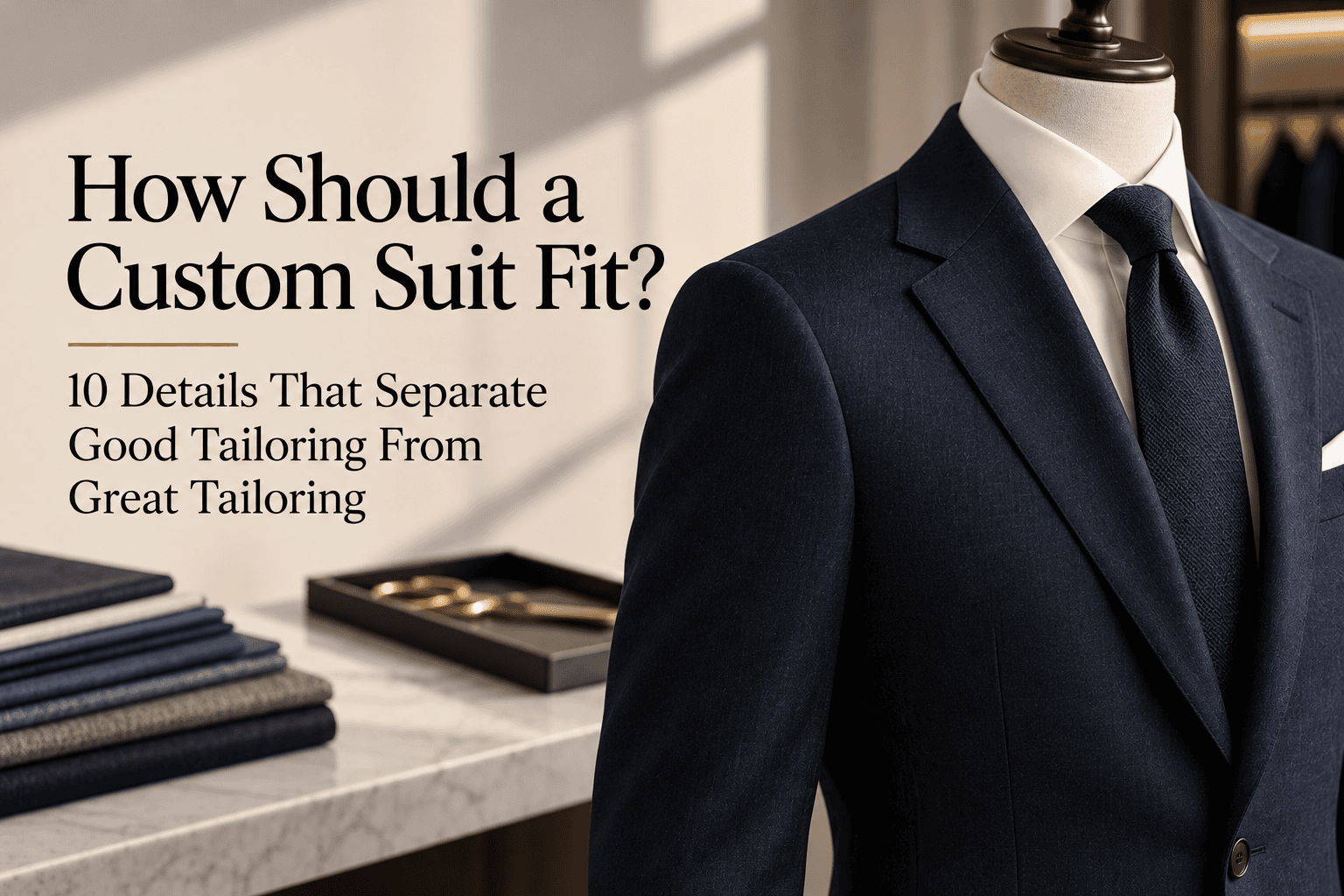
How Should a Custom Suit Fit? 10 Details That Matter
A custom suit should not simply be smaller, slimmer, or more fitted than an off-the-rack suit. Good tailoring is about proportion, balance, movement, and the way the garment follows your individual shape. When a suit fits properly, you notice the overall impression before you notice any individual measurement. The shoulders sit cleanly, the jacket follows the body, the trousers stay in position, and nothing looks as though it is fighting against the wearer.
Every suit we make is cut by hand at our Midtown studio. See how our bespoke suits in NYC are made.
1. The Shoulder Should Sit Naturally
The shoulder is one of the most important parts of a jacket because it establishes the foundation for everything below it. The jacket shoulder should finish close to your natural shoulder without extending dramatically beyond it or collapsing inward. Excess material can make the jacket look oversized, while an overly narrow shoulder can restrict movement and create tension through the sleeve.
2. The Collar Should Stay Close to Your Neck
Look at the area where your jacket collar meets your shirt collar. The jacket should sit close to the neck without creating a noticeable gap or roll. This becomes particularly important when you are wearing the suit with a dress shirt and tie. Collar balance can also reveal posture issues that are difficult to address with a standard garment.
3. The Jacket Should Close Without Excessive Pulling
Button the jacket and look at the fabric around the fastening point. A few natural folds are normal when you move, but strong horizontal pulling or an obvious X-shaped strain usually indicates that the jacket needs more room. At the same time, a jacket that hangs excessively loose through the waist can make the entire suit look unfinished.
4. Sleeve Length Should Work With the Shirt
The jacket sleeve and shirt cuff should work together rather than competing for attention. A small amount of shirt cuff can create a polished proportion, but the exact amount depends on your arm length, shirt cuff, jacket construction, and personal preference. Custom tailoring allows this relationship to be adjusted instead of forcing you into a predetermined sleeve length.
5. Jacket Length Changes Your Proportions
Jacket length affects how the entire body appears in a suit. A jacket that is excessively short can make the torso appear compressed, while too much length can make the garment feel heavy. Your height, posture, trouser rise, and preferred silhouette should all be considered together when establishing the correct jacket length.
6. The Waist Should Follow Your Shape
A tailored jacket should create shape without feeling restrictive. Too much fabric through the waist creates a boxy appearance, while excessive suppression can make sitting and moving uncomfortable. The right amount of shaping creates a clean line while preserving the ease needed for a normal day.
7. Trousers Should Sit Correctly at the Waist
The waistband should sit comfortably and remain in position without depending on a belt to hold the trousers up. From there, the rise, seat, thigh, and leg opening can be adjusted to suit your proportions. A good trouser fit should look clean when standing and remain comfortable when sitting.
8. Watch the Seat and Trouser Break
Look at the back of the trousers as well as the front. Excess material around the seat can create unwanted folds, while a garment that is too tight can pull across the back of the thighs. The trouser break should then be considered with the leg opening and shoe rather than treated as an isolated measurement.
9. Test the Suit While You Move
A suit is not designed solely for standing in front of a mirror. Walk around, sit down, raise your arms, reach forward, and move naturally during a fitting. The purpose of multiple fittings is to evaluate how the garment behaves on the body, not simply whether it looks good in one stationary position.
10. The Finished Suit Should Still Look Like You
The goal of custom tailoring is not to make everyone look the same. Some clients prefer a clean, modern silhouette while others want more traditional proportions. A good custom suit should reflect your build, lifestyle, and preferences while improving the overall balance of the garment.
Why Custom Tailoring Makes These Details Possible
Standard sizing starts with a predetermined garment. Custom tailoring starts with the person. That difference gives the tailor more flexibility to account for shoulder slope, posture, proportions, preferred ease, and the way you actually wear the suit. The result is not simply a better size; it is a garment designed around you.
Book Your Private Consultation
If you want to understand what a properly fitted custom suit should look and feel like, visit Bespoke Ensemble at 315 Madison Avenue, 20th Floor, New York, NY 10017. Call +1 212-920-5474 or book a complimentary consultation online.